
Each month, our team at Lightning Dental Charts reviews rulings and case discussions from the Dental Board to identify emerging themes in clinical judgment, documentation, and risk management.
April’s meeting contained enough instructive cases that we divided our analysis into two parts. In Part I, we examined informed consent documentation and how dentists should chart known complications. Part II focuses on two additional topics that arise frequently in general practice: managing patients on blood thinners and treatment planning considerations when placing and loading implants.
3. Managing Warfarin Patients Before Implant Surgery
The first case involved a patient taking Warfarin who required endosseous implants. Before proceeding with surgery, the dentist performed an in-office PT/INR test using a finger-prick home testing kit. The alternative approach would have been coordinating with the patient’s primary care physician to temporarily discontinue the medication. The patient’s INR measured a 3.5 result, and treatment proceeded without incident.
The Board held that the dentist’s approach was acceptable. While physician-directed medication management may be preferable in some circumstances, the Board confirmed that in-office PT/INR testing can be an appropriate method of evaluating whether implant surgery may safely proceed. In this case, the Board indicated that treatment can move forward when the INR reading is 4.0 or below.
Key Takeaway
When treating patients taking blood thinners, the chart should clearly document:
- The medication being taken
- The method used to evaluate bleeding risk
- PT/INR results when obtained
- The clinical reasoning supporting the decision to proceed
- Any communications with the patient’s physician
Cases involving anticoagulants often receive heightened scrutiny after complications occur. Thorough documentation of the decision-making process can be just as important as the clinical outcome itself.
4. Blood Thinners, Post Operative Instructions, and Unintended Consequences
A related case highlights another risk that may receive less attention. At a dentist’s request, a patient’s primary care physician instructed the patient to discontinue Warfarin before implant placement. The surgery itself occurred without incident. Eight days later, however, the patient suffered a stroke.
The patient’s attorney subsequently filed suit against both the physician and the dentist, alleging that the patient had never been instructed when to resume the medication following surgery. Whether that allegation ultimately succeeds is less important than the practical lesson it provides.
Key Takeaway
When blood thinners are discontinued before dental treatment, the chart should clearly document both verbal and written post operative instructions.
A simple notation such as: “Oral and written post operative instructions provided to patient.” can become critically important if questions arise later regarding what information was communicated.
Practices should also consider including language in their written instructions such as: “If you are taking blood thinners and stopped taking them before dental surgery, contact your physician as soon as possible to determine when to resume your medication.”
The broader lesson is that Board cases and lawsuits often focus on what happened after treatment just as much as what occurred during treatment.
5. Immediate Implant Loading Without Posterior Occlusion
The final April case involved implant placement and immediate loading. The dentist placed implants and immediately loaded temporary crowns and bridges. However, the patient lacked bilateral posterior occlusion. The Board held that immediate loading under these circumstances fell below the standard of care. For readers of our January Board recap, this theme may sound familiar.
In January, we discussed a case in which anterior crowns were placed despite a lack of bilateral posterior support. The Board’s reasoning was that treatment should not proceed when the biomechanical foundation necessary for long-term success is absent. A similar principle appears to have guided the Board’s analysis here.
Key Takeaway
Before immediate loading, dentists should carefully evaluate whether the patient’s occlusion provides adequate support for predictable function and healing.
From a documentation perspective, charts should clearly reflect:
- Occlusal findings
- Treatment planning rationale
- Risks discussed with the patient
- Clinical reasoning supporting immediate loading
The Board continues to emphasize that successful treatment planning requires evaluating the entire functional system rather than focusing solely on the tooth or implant being restored.
Final Thoughts
April’s cases reinforce a recurring theme that appears throughout many Board investigations. Clinical outcomes matter, but Boards frequently focus on the reasoning behind treatment decisions and whether that reasoning was properly documented.
Whether managing anticoagulant medications, communicating post operative instructions, or evaluating implant treatment plans, dentists place themselves in the strongest position when the chart clearly demonstrates what was considered, what was communicated, and why a particular course of action was chosen.
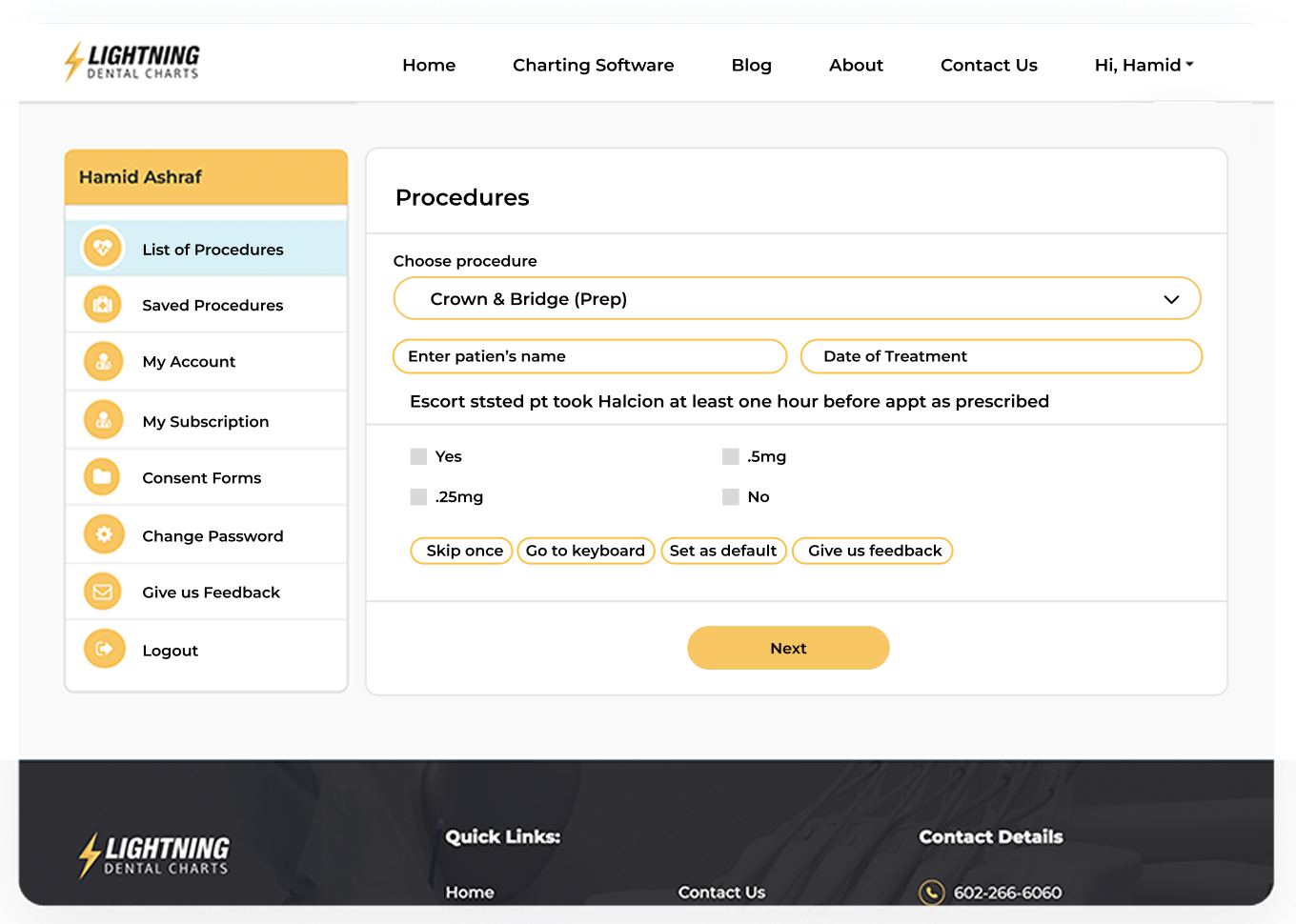
Lightning Dental Charts is designed to help practices create thorough, defensible records efficiently through structured prompts, informed consent workflows, and documentation safeguards that align with how Boards actually review cases.
If you would like to strengthen your documentation workflow while reducing legal exposure and saving time charting, explore Lightning Dental Charts with our 14 day free trial.